
Best Backpack Manufacturers in Mumbai
- sibiabagswebsite
- Dec 11, 2025
- 6 min read
Looking for Best backpack manufacturers in Mumbai? Discover manufacturing standards, materials, customization options, pricing guide, and how Sibia Bags helps corporates, schools and retailers order bulk backpacks with fast turnaround.

Mumbai is India’s manufacturing and commercial powerhouse — a city where design, scale, and supply converge. For businesses, schools, event planners, retailers and brands seeking dependable production partners, choosing the right factory matters. This guide will help you evaluate and select the Best backpack manufacturers in mumbai, explaining what to look for, the production process, cost drivers, quality checks, sustainability options, and practical tips to place and manage bulk orders.
Throughout the article you’ll find actionable checklists, comparison pointers, and an example manufacturer profile so you can move from research to purchase with confidence.
Why choosing the right backpack manufacturer matters
Selecting the right partner goes beyond price. The right manufacturer will:
Deliver consistent quality at scale.
Offer material and design flexibility for branding.
Maintain reliable lead times and transparent communication.
Provide compliance and testing (zippers, stitching, load tests).
Support value-add services: printing, embroidery, custom labels, packaging.
Poor choices lead to product defects, missed delivery windows, brand damage and hidden costs. Investing time to evaluate manufacturers upfront saves money and headaches later.
How Mumbai stands out as a manufacturing hub
Mumbai’s advantages include:
Close proximity to major ports and freight routes — ideal for export and inter-city logistics.
A mature supply chain for components (zips, buckles, webbing, foam, fabrics).
Experienced workforce and small-to-large-scale production units.
Established OEM/ODM capabilities for private label and branded projects.
Access to designers, prototypers, and testing facilities.
These strengths mean you can find partners that handle everything from simple school backpacks to technically complex laptop and travel backpacks.
What to look for when vetting backpack manufacturers
Below is a practical checklist to evaluate suppliers.
H2 — Capabilities & capacity
Minimum order quantity (MOQ) and maximum monthly capacity.
Ability to scale production quickly for seasonal spikes.
Types of products made (school backpacks, laptop backpacks, travel/daypacks, anti-theft).
H2 — Materials & component sourcing
Do they source fabrics (nylon, polyester, canvas, oxford, ripstop) in-house or through vetted suppliers?
Availability of premium components: YKK zippers, molded buckles, water-resistant coatings.
Options for recycled or OEKO-TEX-certified materials if sustainability matters.
H2 — Design & prototyping
In-house pattern-making and sampling facilities.
Lead time for prototypes and revisions.
Support for tech packs, CAD patterns, and graded sizing.
H2 — Quality control & testing
Stitch density standards, seam reinforcement, and load testing.
Inspection procedures: pre-production, in-line, final random inspection.
Will they provide inspection reports and sample certificates?
H2 — Compliance & certifications
Workplace safety and labor compliance (local labor laws, ethical sourcing).
Certifications relevant to your market (e.g., REACH, OEKO-TEX, ISO).
Export documentation and customs support.
H2 — Communication & project management
Single point of contact for orders.
Regular status updates and photo/video evidence from production lines.
English-language capability for smooth coordination.
Typical production process (what to expect)
Understanding the production steps helps you set realistic expectations.
Inquiry & Quotation — Share specifications, estimated order quantity, preferred materials and delivery expectations.
Design & Sampling — Manufacturer produces proto-samples. Expect 7–21 days depending on complexity.
Pre-production sample approval — Approve fit, materials and construction.
Materials procurement — Lead times for fabrics and trims vary; premium components can add time.
Cutting & Sewing — Components cut and assembled on sewing lines.
Finishing & Hardware fitting — Buckles, zips, labels, tags and padding added.
Quality checks — Inspections for aesthetics and functionality.
Packing & Dispatch — Bulk packing, labeling and shipping preparation.
Knowing each stage lets you plan payments, milestone inspections, and delivery dates.
Cost drivers and pricing expectations
Major factors that determine price:
Order quantity — Larger orders lower per-piece cost due to economies of scale.
Material choice — Heavy-duty waterproof fabric and branded zippers increase cost.
Hardware & accessories — Molded buckles, metal zippers, foam padding add expense.
Complexity of design — Multiple compartments, custom molding, laptop sleeves increase labor time.
Printing/branding — Embroidery, screen print, PVC badges have separate tooling costs.
Lead times — Rush orders usually carry a premium.
Request detailed costing: fabric cost, trims, assembly, QC, packaging, freight and taxes. Transparent quotations prevent surprises.
Sustainability & responsible manufacturing

More buyers demand responsible sourcing. When evaluating manufacturers ask about:
Use of recycled polyester (rPET) or organic cotton.
Water-saving dyeing processes and chemical management.
Waste reduction programs and component recycling.
Worker welfare policies and third-party social audits.
Manufacturers who can offer documented sustainability credentials will make your brand appeal to conscious consumers.
Case study: manufacturer profile (example)
Below is a concise, realistic profile to help you compare vendors.
Sibia Bags — Mumbai-based manufacturer (example)
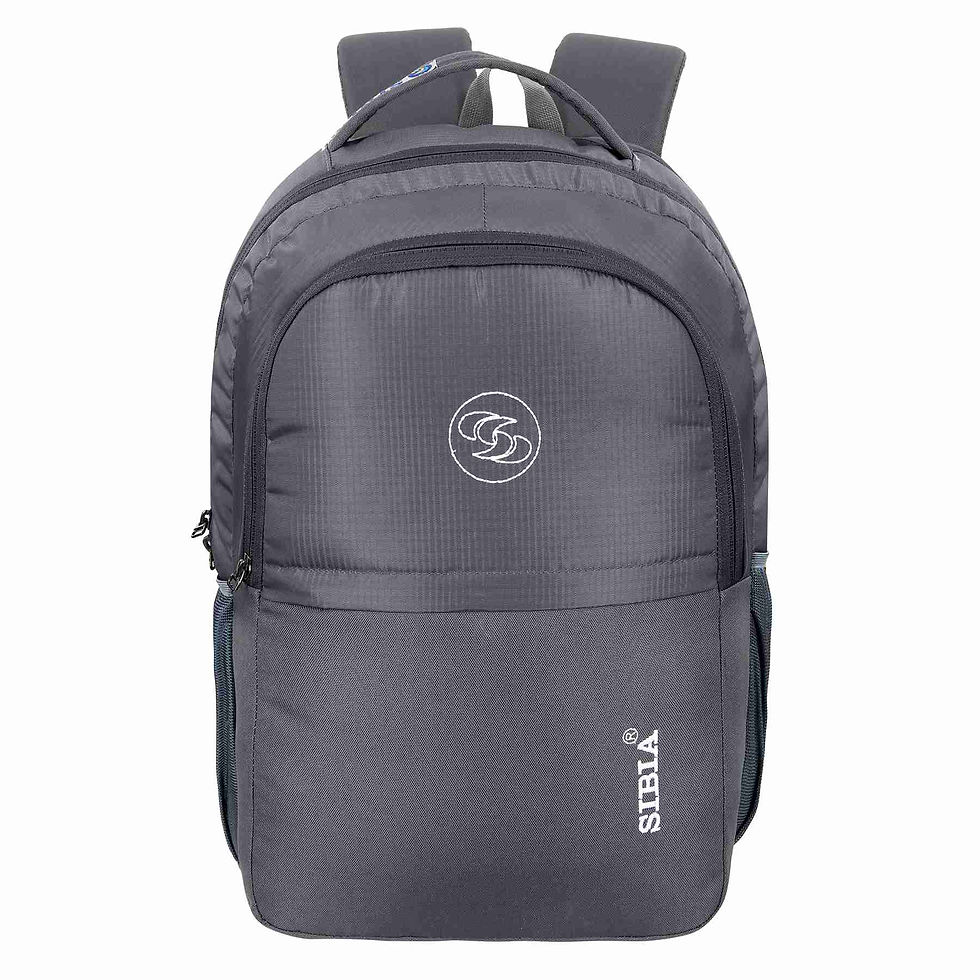
Sibia Bags is a Mumbai-based factory offering customized backpacks for corporates, schools and retail clients. They provide end-to-end services from prototyping to bulk production, and maintain dedicated lines for school backpacks and corporate promotional backpacks. Their strengths include quick prototyping, flexible MOQs for promotional runs, and experience in coordinating B2B deliveries across India.
(Brand mention #1: Sibia Bags)
How to request samples & run a successful pilot
Ask for a tech pack — Provide dimensions, materials, hardware codes and branding locations.
Order a small pilot — 50–200 pieces to test production consistency and market acceptance.
Specify acceptance criteria — Stitching, zipper function, colorfastness and padding thickness.
Arrange third-party inspection — For larger orders, engage an inspection agency for pre-shipment checks.
Test in real-world conditions — Distribute samples to a focus group and collect feedback.
A well-managed pilot reduces risk for a full production run.
Logistics & lead-time planning
Standard lead times: sampling (7–21 days), production for standard backpacks (30–60 days).
Rush production may be possible at higher cost.
Consider customs and inland transit when importing or shipping interstate.
Factor in buffer time for packaging, labeling and unforeseen delays.
If your product is seasonal (school start or festival sales), plan production months in advance.
Common mistakes businesses make — and how to avoid them
Choosing solely on price — Prioritize QC and compliance over the lowest quote.
Skipping a production sample — Always approve a final sample before bulk run.
Vague tech packs — Provide detailed specs to prevent misinterpretation.
Ignoring packaging and labeling — Packaging adds to perceived value and protects during transport.
Underestimating shipping time — Plan realistic lead times and include buffers.
Avoiding these mistakes will protect margins and brand reputation.
Negotiation tips for better terms
Get multiple quotes from 3–5 manufacturers to benchmark pricing.
Negotiate pricing tiers based on volume and recurring orders.
Ask for complimentary samples or reduced-cost prototypes for long-term contracts.
Negotiate payment terms: deposit + balance on delivery or third-party inspection.
Discuss penalty clauses for consistent production delays if timely delivery is critical.
A balanced negotiation protects both parties and builds a long-term relationship.
How to choose between OEM and ODM
OEM (Original Equipment Manufacturer) — You supply design and tech pack; factory manufactures to spec. Best if you have exact designs.
ODM (Original Design Manufacturer) — Factory offers its own designs which you can brand. Good for quicker time-to-market and lower design costs.
Decide based on your product maturity, design ownership needs, and time constraints.
Red flags when vetting factories
No willingness to provide samples or references.
Vague answers about material origins.
Reluctance to provide inspection reports or factory photos.
Excessively long or unclear lead times without explanation.
No traceable address, poor communication, or requests for full payment upfront without escrow or safeguards.
If you encounter these signs, proceed cautiously.
Frequently Asked Questions (FAQ)
Q: What is a reasonable MOQ for backpacks?
A: MOQs vary widely. Many Mumbai manufacturers offer promotional runs starting at 100–200 pieces, while standard production lines may require 500–1000 pieces to achieve competitive unit prices. Discuss MOQs upfront and ask about gradual scaling options.
Q: Can I get custom branding like embroidered logos and woven labels?
A: Yes. Most manufacturers provide embroidery, screen printing, woven labels, rubber PVC badges and heat-transfer options. Embroidery has tooling and digitization costs, so include those in initial quotes.
Q: How long does sampling take?
A: Sampling typically takes 7–21 days depending on complexity and component availability. If you need faster turnaround, ask about express sampling (at higher cost).
Q: Are there quality standards specific to school backpacks?
A: Yes — school backpacks require reinforced seams, strong zippers, sturdy straps, and safety considerations (rounded hardware, non-toxic materials). Ask for reinforced stitching specs and load-tests for the bag’s main compartment.
Q: Do Mumbai manufacturers handle export documentation?
A: Many experienced manufacturers handle export paperwork, customs documentation and can help coordinate freight forwarding. Confirm their export experience and ask for references if you’re shipping internationally.
Final checklist before placing an order
Approved pre-production sample signed off in writing.
Detailed tech pack and Bill of Materials (BOM).
Agreed MOQ, unit price and total cost breakdown.
Quality standards and inspection plan documented.
Production timeline with milestones and delivery date.
Payment terms, penalties and dispute resolution clarified.
Completing this checklist mitigates most common supply risks.
Closing and next steps
Finding the best backpack manufacturers in mumbai means balancing cost, quality, lead time and sustainable practices. Use the checklists in this guide when shortlisting vendors and insist on clear samples, transparent communication and inspection plans before committing to large orders.
If you’re ready to discuss a sample run or need help shortlisting manufacturers based on your specifications, we can help connect you with experienced suppliers and manage sample approvals.
(Brand mention #2: Sibia Bags)
Call to action (CTA)
Ready to get a quote or order a sample? Contact Sibia Bags for tailored backpack manufacturing solutions, quick prototyping and bulk order support.



Comments